Same Bottle, Different Cocktail: Why No Two Rebrands Ever Look Alike
The question you keep circling back to
You've browsed the library. You've read a sample chapter and thought, honestly, this is better than what I'd produce on a deadline. And then the picture forms: you, in front of the audience you spent years earning, holding up "your" book — while somewhere out there a competitor holds up the exact same one. Is someone else selling the identical book? What happens if it surfaces under someone else's byline in front of my people?
If that question stopped you from buying, good. It means your name actually means something to you. Coaches build practices on trust that took years to compound. Authors put their reputation directly on every page they publish. Creators sell to buyers who consume content for a living and can smell recycled material from the table of contents. The fear isn't silly, and it deserves a straight answer instead of a brush-off.
So here's the straight answer.
Nobody has ever ordered "gin"
Picture two bartenders on the same street. Both pour from the same bottle of gin. One builds a martini — dry, cold, a twist of lemon. The other builds a negroni — bitter, red, over a big cube. Same base spirit, and no customer in the history of either bar has ever ordered "gin, please, straight from the bottle." They order the drink. The base spirit disappears into the recipe.
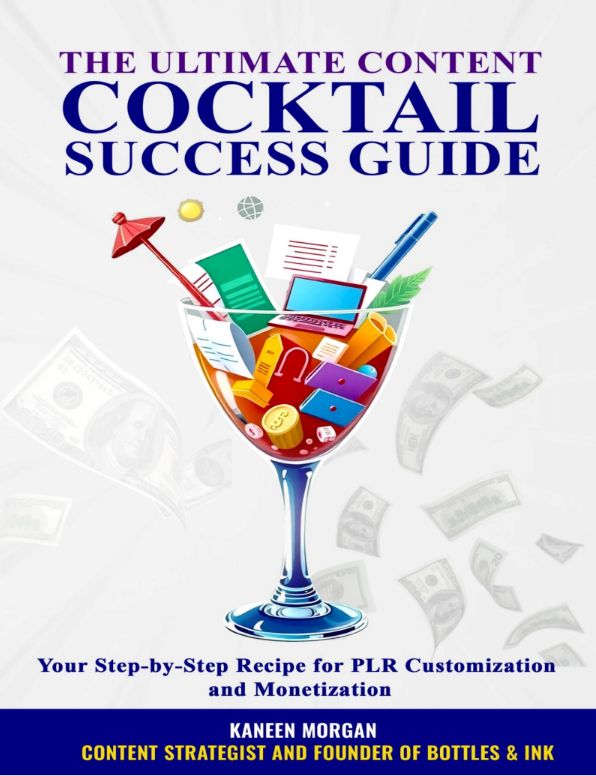
A licensed manuscript works exactly the same way. The manuscript is the base spirit. The recipe is everything you pour in around it: your title, your cover, your opening story, your client examples, the framework you've named and taught for years, the offer sitting behind the last chapter, and above all your voice. That recipe is what your audience actually consumes. They no more buy "the manuscript" than a bar customer drinks the bottle.
What a real rebrand looks like
This isn't theory — it's what buyers actually do with a title before it ever touches their audience:
- Retitle it, because the title is the first thing that makes it yours.
- Write a new introduction in your own words, opening with the story only you can tell.
- Swap the deliberately broad examples for ones drawn from your own client work.
- Rename the core framework so it matches the model you already teach.
- Cut the chapters that don't fit your people, and restructure what's left — into a workbook, a course, an email sequence, a keynote.
- Close with your call to action, pointing at your program, not a generic one.
By the time you've done that, the finished piece and the source manuscript are related the way a negroni is related to a bottle of gin. A stranger tasting both would never call them the same drink.
The honest math
Now add the numbers. The internet is enormous, and your audience is narrow — that's the whole point of having a niche. For the collision you're picturing to actually happen, all of this would need to line up at once: another buyer licenses the same title, works the same niche, speaks to the same audience, and both of you publish with so little customization that your readers recognize the shared bones underneath two different titles, covers, stories, and frameworks. Each condition alone is unlikely. Stacked together, it's the kind of thing you could wait a career to witness.
The way we build titles pushes those odds down further. Every book in the library is human-edited, research-informed, and written with examples kept broad on purpose — so that your customization layer, even a light one, becomes the thing a reader remembers. And the license terms are written in plain language, so you know exactly what you're allowed to do before you do it.
Here's what we won't do: we won't tell you you're the only person who can ever license a library title. That's not how a shared library works, and anyone who promises otherwise is telling you what you want to hear. What we'll tell you instead is the truth. The base spirit is shared. The cocktail never is.
If you need the whole bottle
Some situations genuinely call for more than good odds. Maybe the book is the brand — your signature work, the thing your keynote is built on. Maybe your organization needs to know, contractually, that nobody else has the asset. That need is real, and there's a right tool for it: Member-Exclusive Content Rights, where select finished titles go to one buyer with a full exclusive license and come off the shelf for everyone else — and InkWell, where content is built for you alone from the start. If airtight ownership is the requirement, don't talk yourself out of it. Use the tool made for it.
What opens up when the fear lets go
Here's what the buyers who moved past this worry are doing while it's still holding you at the door. One manuscript becomes a rebranded book, then a companion workbook for the group program, then the outline of a keynote, then a six-part email sequence, then the lead magnet that fills next month's calendar. A slow content month stops being a crisis. A new topic gets tested in weeks instead of committing half a year to writing from scratch. That's the difference between owning a bottle and running a bar — the same base material, poured into every format your business drinks.
The library holds 37 titles today, each one built to be poured that way.
Taste it first
You don't have to take any of this on faith. Grab the free starter resources, take one piece of content, and mix your own version — your title, your story, your framework. Then read the finished thing and ask yourself honestly whether anyone on earth would mistake it for someone else's drink.